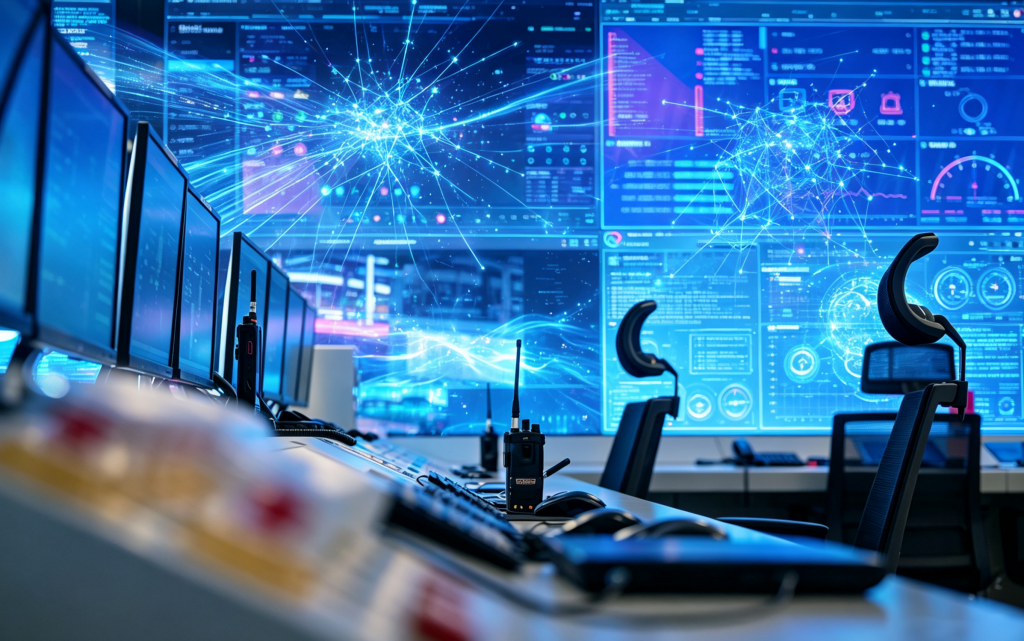
In the control room of a large petrochemical base in Shandong, a “Special Work Permit Anomaly” alert pops up on the screen of Chief Safety Officer Zhao. Although gas detection data for the upcoming hot-work zone is normal, the AI, having cross-referenced meteorological data from the past three days and the operating loads of adjacent facilities, determines that there is an uncontrollable diffusion risk during the afternoon period. The system automatically suspends the work permit and generates adjustment recommendations. After reviewing the AI’s logical chain, Chief Officer Zhao confirms the recommendation and clicks “Confirm”—the entire process takes less than five minutes. This scenario is a microcosm of the industrial safety transformation being driven by Beijing Bangandi Information Technology Co., Ltd. As a national-level key “Little Giant” enterprise with over two decades of deep industry experience, Bangandi is using its self-developed AI large models and intelligent agent platform to equip safety managers with a 24/7 “super brain,” shifting their focus from tedious data processing to high-value decision-making.
1. Two Decades of Deep Cultivation: Forging a Safety Knowledge Base for the AI Era
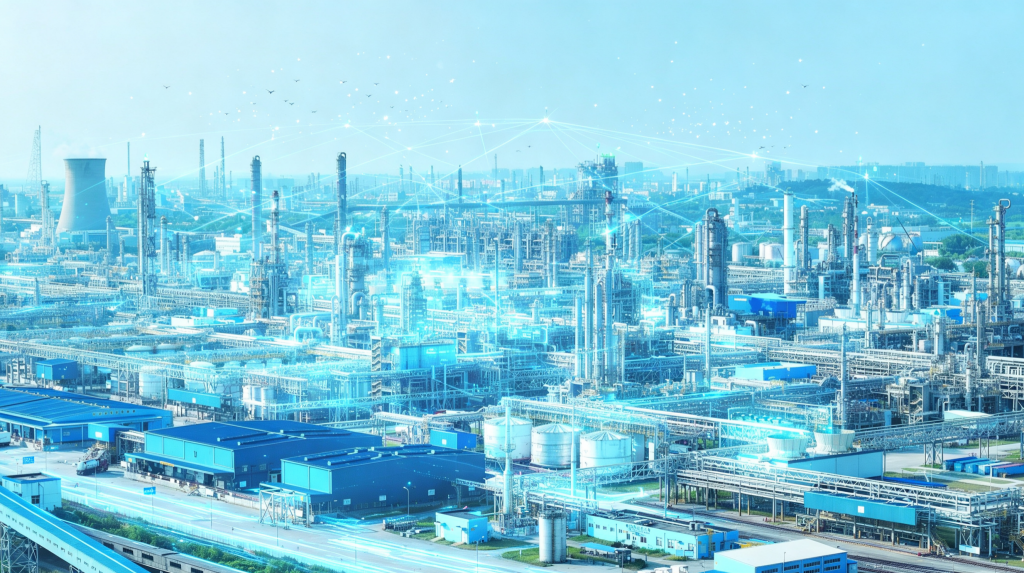
Safety production management in the petrochemical industry relies heavily on the “living dictionary” in the minds of managers: which types of operating conditions are prone to problems in which seasons, and which abnormal signals—though not exceeding limits—still warrant caution. Such judgment requires ten or even twenty years of on-site experience. However, this experience-based management model now faces dual challenges: the long cultivation cycle for experienced professionals and the inability to cover every risk node as enterprises scale up. Through serving over 1,000 large and medium-sized enterprise clients, Bangandi came to a profound realization: the key to solving the problem is not to use software to “replace” human judgment, but to distill validated risk assessment logic into a callable, replicable, and evolvable AI capability. Based on over two decades of accumulated industry data and business practices in hazardous chemicals and petrochemicals, Bangandi has independently developed a series of vertical AI models, including enterprise comprehensive risk early warning models, medium- and long-term accident risk prediction models, major hazard source safety risk assessment models, and special operations risk analysis models. What sets these models apart is that they are not merely generic algorithms stacked together, but “explainable AIs” that incorporate industry best practices. They not only provide conclusions but also present complete reasoning chains, allowing safety managers to scrutinize, verify, and intervene.
2. Enterprise-Level Agent Platform: Breaking Data Silos
In traditional factory IT architectures, DCS, SIS, MES, and equipment condition monitoring systems operate independently, with data scattered across different screens. To conduct a risk assessment, safety managers often have to switch between multiple systems and manually correlate data. But human attention bandwidth is limited, and cross-system analysis can easily miss critical signals. Bangandi’s enterprise-level AI agent platform solves this “last mile” problem. Centered around six core components—orchestration, knowledge, tools, governance, observability, and deployment—the platform encapsulates dispersed knowledge, data, and business actions into a callable and traceable agent asset pool. The safety manager’s work interface shifts from “facing a pile of systems” to “facing an intelligent collaborator.” They need only focus on the risk assessments and recommendations pushed by the AI, using their own experience for final confirmation or adjustment.
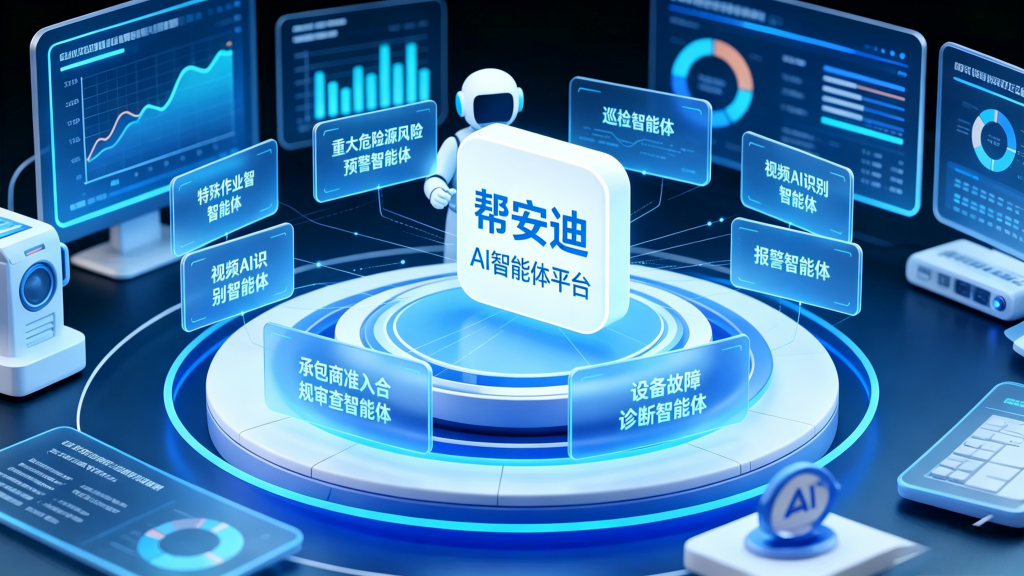
Currently, Bangandi has built an agent matrix covering multiple core business scenarios: the special operations agent integrates work permit applications, qualification verification, procedure comparison, measure generation, and approval traceability into an automated chain, compressing approval times from hours to minutes and eliminating omissions and human errors; the major hazard source risk early warning agent aggregates real-time data from tanks, units, alarms, and guarantee responsibilities to enable graded warnings and closed-loop supervision, helping teams shift from “staring at screens watching alarms” to “reviewing risk reports and making decisions”; the equipment fault diagnosis agent accesses data on vibration, temperature, rotational speed, and spectrum from critical pumps and compressors, accurately pinpointing component-level issues such as imbalance, bearing faults, and gear damage, and outputting actionable maintenance recommendations and risk assessments; the video AI recognition agent not only identifies whether safety helmets are being worn but also anticipates cross-operation risks by analyzing personnel trajectories and vehicle movement patterns, achieving a leap from “post-incident evidence collection” to “mid-incident intervention.” Each agent reuses the same platform foundation, and safety managers can call on and orchestrate them as needed from a single work interface. AI handles broad-spectrum perception and probabilistic assessment, while humans focus on deep thinking and final decision-making—each playing to their strengths.
3. “Human + AI” Collaboration: Amplifying the Value of Safety Management
After the deployment of Bangandi’s solutions across more than 1,000 enterprises, a notable shift has emerged: frontline safety managers are reporting increased—not decreased—job satisfaction. In the past, a significant amount of energy was consumed by ledger organization, document routing, and repetitive data verification. These tasks are important but tedious, offering little room to demonstrate professional judgment. After the agent platform took over these “high-energy, low-value” tasks, safety teams were able to focus on scenarios that truly require human intelligence, such as comprehensive assessments under complex operating conditions, cross-departmental risk coordination, and optimization and simulation of emergency response plans. This change is particularly evident in major hazard source management scenarios. Previously, dozens of alarm points had to be monitored simultaneously, and with a flood of threshold-triggered signals, it was difficult to distinguish genuine precursors from false alarms caused by normal process fluctuations. After the risk early warning model was introduced, the system automatically performs data cleaning and correlation analysis, filtering out redundant alarms and pushing only signals with potential for risk evolution to human review. Safety managers are no longer faced with a chaotic pile of data, but with a preliminary risk brief, allowing them to focus their limited energy on critical decisions.
4. From Tool to Ecosystem: Bangandi’s Long-Term Commitment
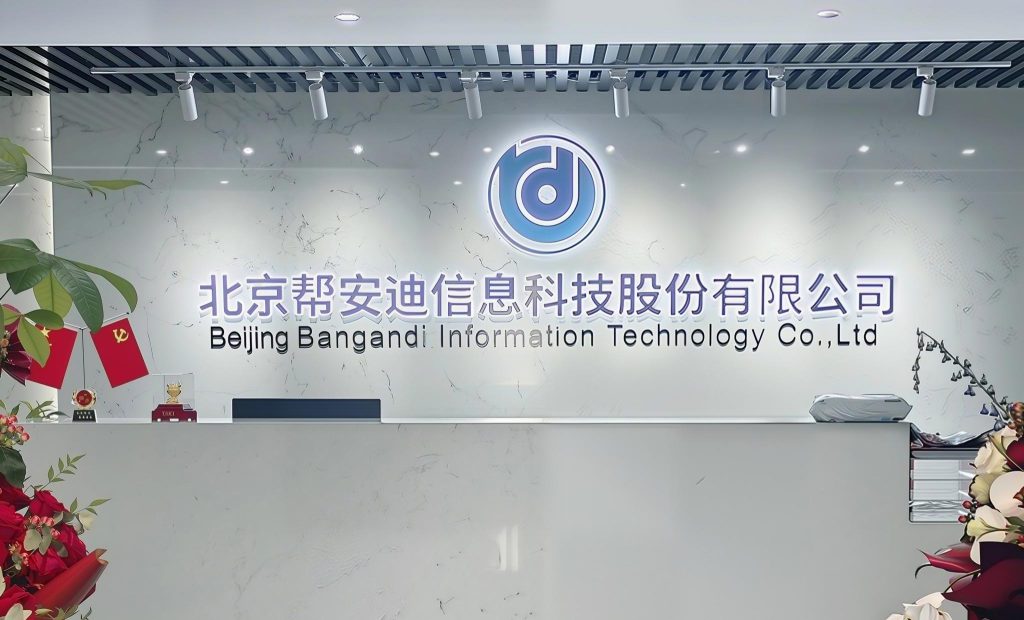
Since its founding in 2001, Bangandi has witnessed three major leaps in China’s industrial safety: from “human wave tactics” to “automated monitoring,” and then to “digital-intelligent prediction.” In the digital transformation pilot programs in Yinchuan, Jilin, and Danzhou, Bangandi is embedding the “Human + AI” collaborative model into the management practices of more SMEs. Looking ahead, the company will continue to deepen iterative upgrades of its AI large models and agent platform, driving the deep integration of cutting-edge technologies such as digital twins and knowledge graphs with industrial safety scenarios. The words of Bangandi’s Chairman Lin Mingqi perhaps best encapsulate the company’s ethos: “We are not using AI to disrupt industrial safety; we are using AI to amplify the power of those who work in industrial safety. So that every manager working in a chemical plant, an industrial park, or a mine can say with greater confidence—I know where the risks are, and I have the means to control them.”